Students read the article and learn how shark undergoes a complete metamorphosis. Students explore each stage of shark life cycle and look at the pictures.

Shark Life Cycle Worksheets & Printables
Shark life cycle worksheets help children learn about how sharks grow. These printables show children different stages in a shark’s life. Children learn about shark eggs and how they are kept. Then, learn about baby sharks and how they grow up. The worksheets have appealing visuals that help children understand how sharks change. These worksheets are a fun way to explore the life cycle of sharks.
Reading books about sharks enrich children’s knowledge, expand vocabulary, create a positive learning environment. Use a combination of fiction and nonfiction texts to immerse children in the world of sharks!
Create Shark Week theme, based on the Discovery Channel’s and National Geographic. Make shark-themed crafts and complete shark-themed activities.
Have children research different types of sharks. Ideas include blue sharks, bull sharks, great white sharks, and hammerhead sharks.
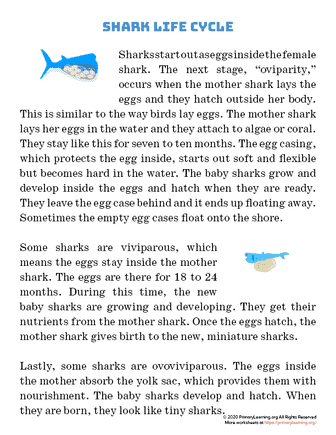
Sharks start out as eggs inside the female shark. The next stage, “oviparity,” occurs when the mother shark lays the eggs and they hatch outside her body. This is similar to the way birds lay eggs. The mother shark lays her eggs in the water and they attach to algae or coral. They stay like this for seven to ten months. The egg casing, which protects the egg inside, starts out soft and flexible but becomes hard in the water.
The baby sharks grow and develop inside the eggs and hatch when they are ready. They leave the egg case behind and it ends up floating away. Sometimes the empty egg cases float onto the shore.Some sharks are viviparous, which means the eggs stay inside the mother shark. The eggs are there for 18 to 24 months. During this time, the new baby sharks are growing and developing. They get their nutrients from the mother shark. Once the eggs hatch, the mother shark gives birth to the new, miniature sharks.
Lastly, some sharks are ovoviviparous. The eggs inside the mother absorb the yolk sac, which provides them with nourishment. The baby sharks develop and hatch. When they are born, they look like tiny sharks.After the egg stage, then the birth stage, comes the newborn stage. Baby sharks are called “pups.” Although mother sharks look for a safe place to either lay their eggs or give birth to their pups, they do not take care of them once they are born. The pups swim away as soon as they are born. Their most important jobs are to find food and to stay away from predators. Pups may be eaten by bigger sharks.
Following the newborn stage is the youth stage. During this stage, the sharks continue to spend their time looking for food and staying away from other creatures that may eat them. The sharks continue to grow, too, becoming much bigger than they were as newborns.The last stage is adulthood. During this stage, sharks reach their full size. Sharks are very different lengths, depending on their species. For example, a great white shark can be up to 20 feet long! But a spined pygmy shark can be less than one foot long. Big sharks do not have to worry much about predators. Along with killer whales, sharks are at the top of the food chain.
Students read the article and learn how shark undergoes a complete metamorphosis. Students explore each stage of shark life cycle and look at the pictures.
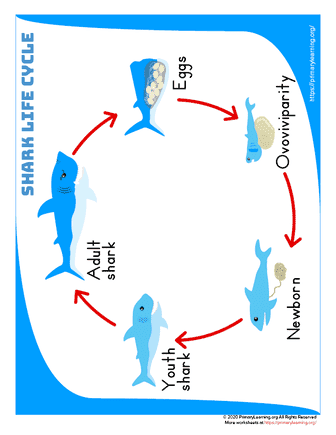
With this shark life cycle anchor chart, students understand that everything goes through a life cycle and how shark undergoes a metamorphosis.
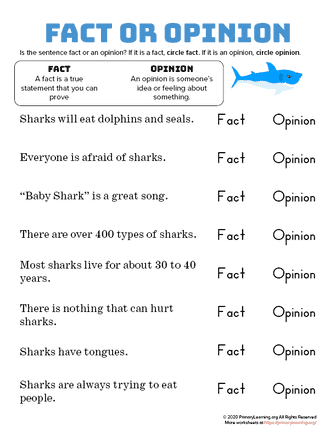
Students learn to recognize the difference between facts and opinions. Students read each statement about shark and determine whether it is a fact or opinion.
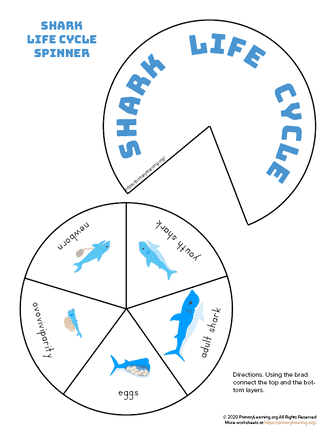
Students will love creating a life cycle spinner wheel and learning about different stages of the shark life cycle. This fun activity is a great addition to your lesson.
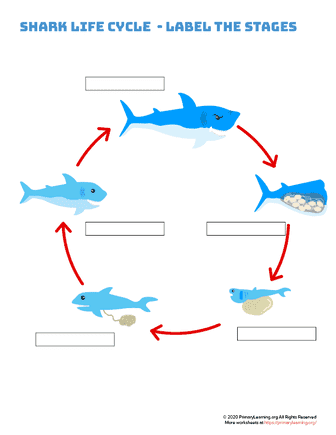
Students use this worksheet to label the stage of shark life cycle. This activity is great to reinforce the shark life cycle vocabulary and practice sequencing.
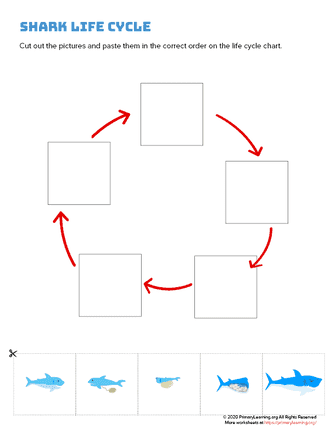
This is a fun science activity for elementary students help students learn about shark life cycle.
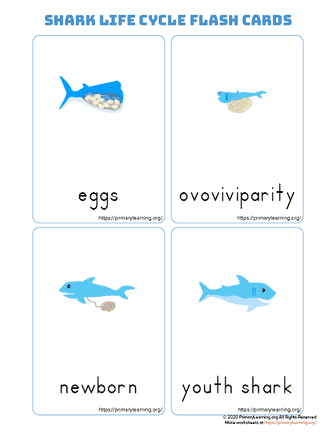
This activity is great to introduce the life cycle of a shark shark and practice sequencing order.
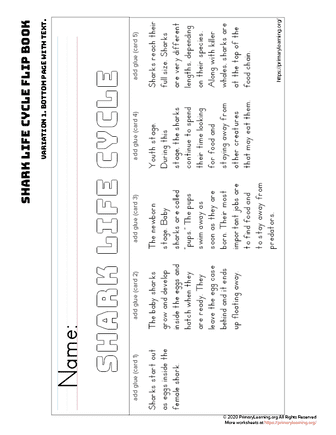
Students will love to make this shark life cycle flipbook! Each part of the shark life cycle is explained and illustrated.
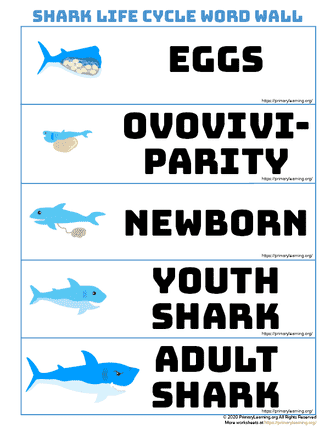
Use the shark life cycle word wall to build vocabulary and writing skills, as well explore stages of the shark life cycle.
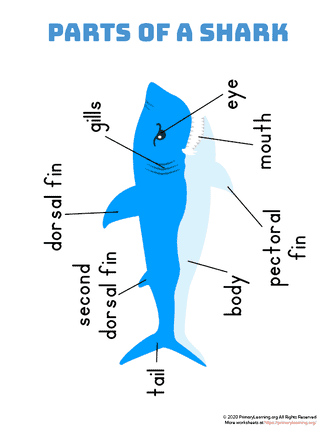
This worksheet allows students to learn the parts of a shark. Two versions included: the picture of a shark with labels and fill the labels with no word bank.
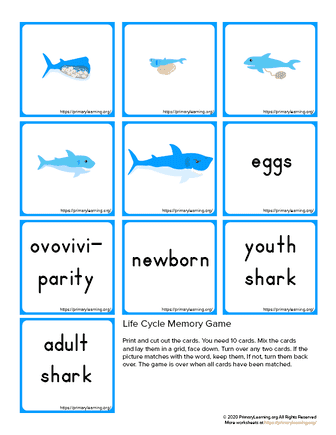
Playing shark life cycle memory game is not only good for concentrating skills, but also reinforce the life cycle vocabulary.
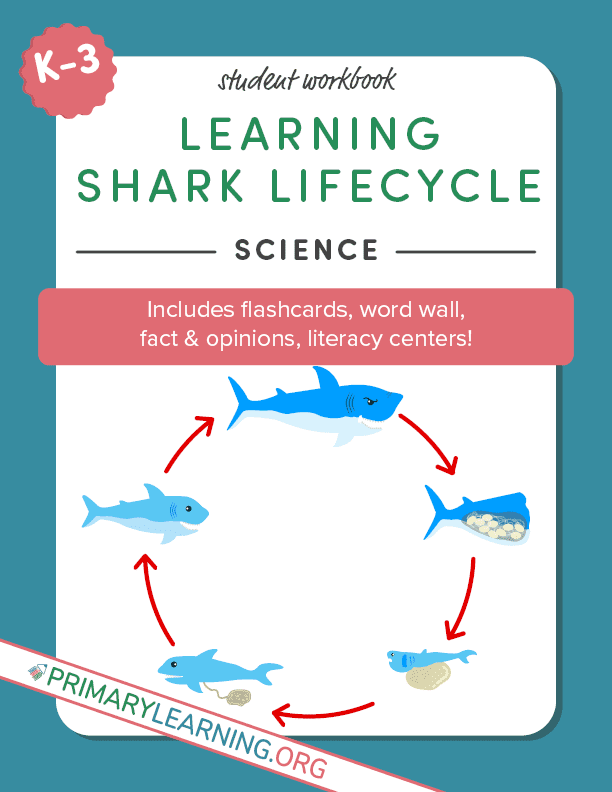
With this workbook, students explore the shark life cycle. The main goal is to learn the transformation of the sharkfrom the egg to the adult in a fun and meaningful way.
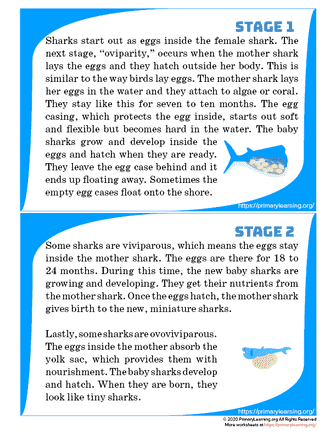
Children are natural scientists and love learning about animals. Use this shark life cycle cards for reading about the metamorphosis.
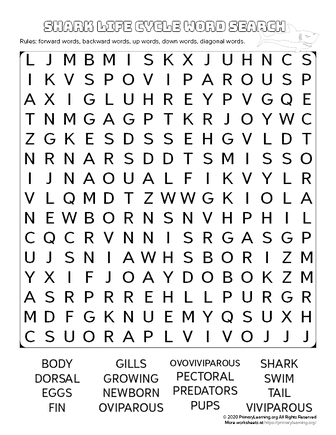
This word search helps students practice vocabulary and build their understanding of the shark life cycle.
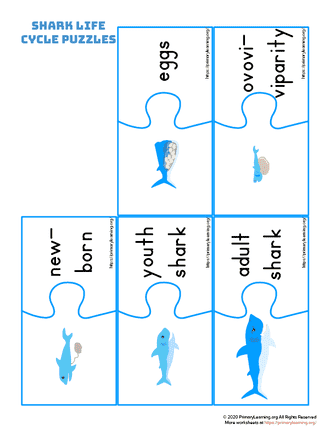
Students will love learning about different stages of the shark life cycle with these hands-on puzzles.
Students use shark bubble thinking map to organize the information they have gathered. A bubble thinking map helps them visualize the information.
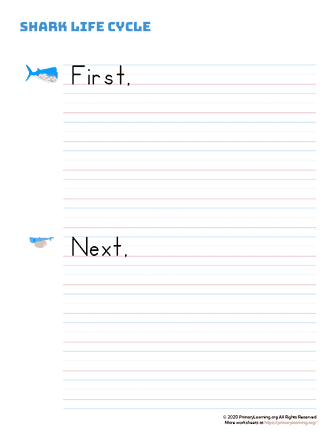
For this sequencing writing prompt activity, students use the pictures to tell about the transformation of a shark.
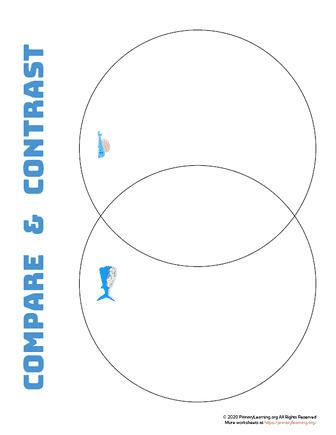
This activity is perfect to compare and contrast different stages of shark life cycle.
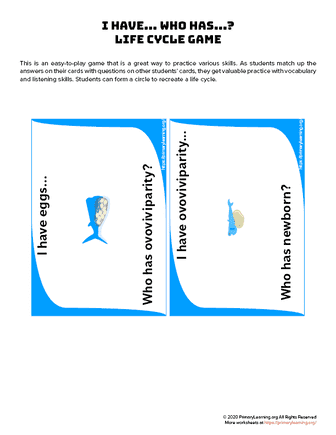
The easy-to-play shark life cycle game is a great way to practice various skills. Students form a circle to recreate the shark life cycle.
Let your students practice the importance of science skills by collecting data (through observation or other resources) and drawing conclusions.
