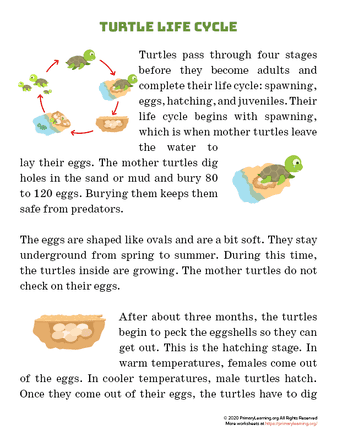
Students read the article and learn how turtle undergoes a complete metamorphosis. Students explore each stage of turtle life cycle and look at the pictures.

Turtle Life Cycle Worksheets & Printables
Young children can learn the life cycle of turtles by acting out each stage. They can begin as eggs, curled up into a ball. Next, they can break out of their shells and pretend to dig out of the sand. As juveniles, they can pretend to swim around, using their arms and legs. Lastly, children can swim around as adult turtles, pretending to eat or swim away from predators.
Read children books about turtles. “One Tiny Turtle” by Nicola Davies can also be found on YouTube, allowing children to hear the author read them her book.
Create a sea turtle sensory bin. Fill a container with sand and add a few rocks. Add turtle figurines for children to play with.Visit an aquarium to provide children with the opportunity to see real-life turtles.
Plan field trips to botanical gardens, farms, or nature reserves where children can observe various life cycles in a real-world setting. Field trips make learning memorable and connect classroom knowledge with practical experience.
Foster open discussions about life cycles, encouraging children to ask questions and share their observations. Classroom discussions promote critical thinking and peer-to-peer learning.
Connect life cycle lessons with other subjects, such as math (measuring growth), language arts (writing about life cycles), and even physical education (exploring life cycles through movement).
The eggs are shaped like ovals and are a bit soft. They stay underground from spring to summer. During this time, the turtles inside are growing. The mother turtles do not check on their eggs.After about three months, the turtles begin to peck the eggshells so they can get out. This is the hatching stage. In warm temperatures, females come out of the eggs. In cooler temperatures, male turtles hatch. Once they come out of their eggs, the turtles have to dig themselves out of the mud or sand.
The next important step is to find water so they can survive. During this stage, the baby turtles are in danger of being eaten by predators. Their mothers are not around to protect them so the baby turtles must do everything by themselves.
Turtles are then in the juvenile stage, which lasts ten or more years. The juvenile stage is sometimes called “the lost years” because it’s not clear where the turtles are or what they’re doing during this time. We know that they are continuing to grow and eat foods like jellyfish and fish eggs. They live in the deep water.The last stage of the life cycle is adulthood. During this stage, turtles migrate to beaches to mate. The female turtles will swim to the shore to lay their eggs. The laying of eggs starts the life cycle all over again!
Students read the article and learn how turtle undergoes a complete metamorphosis. Students explore each stage of turtle life cycle and look at the pictures.
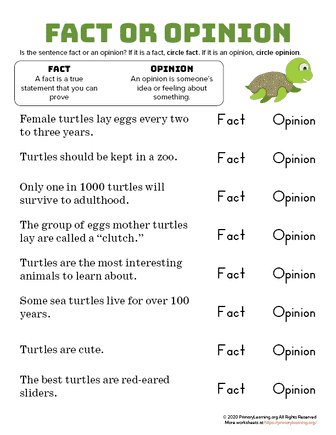
Students learn to recognize the difference between facts and opinions. Students read each statement about turtle and determine whether it is a fact or opinion.
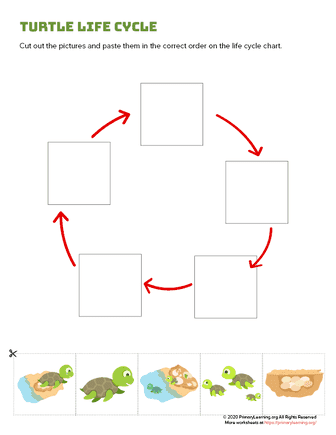
This is a fun science activity for elementary students help students learn about turtle life cycle.
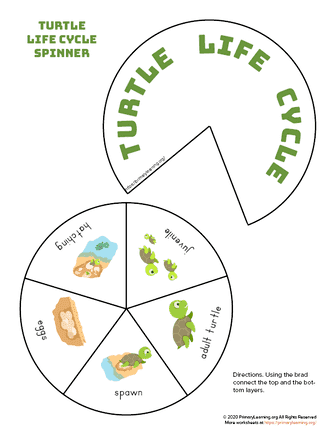
Students will love creating a life cycle spinner wheel and learning about different stages of the turtle life cycle. This fun activity is a great addition to your lesson.
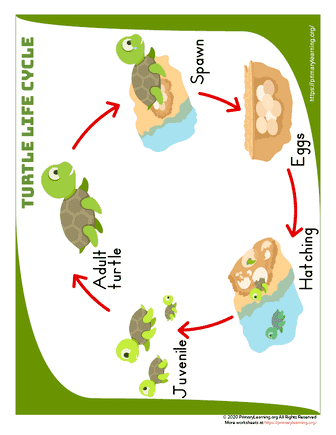
With this turtle life cycle anchor chart, students understand that everything goes through a life cycle and how turtle undergoes a metamorphosis.
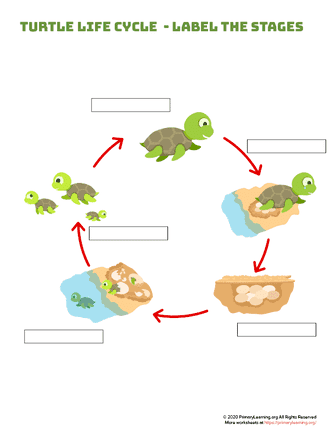
Students use this worksheet to label the stage of turtle life cycle. This activity is great to reinforce the turtle life cycle vocabulary and practice sequencing.
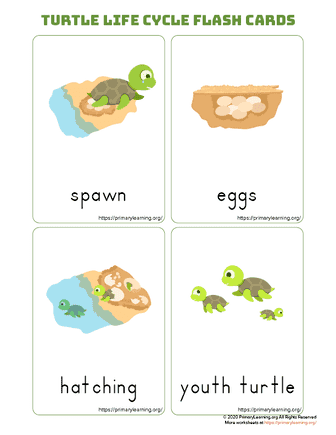
This activity is great to introduce the life cycle of a turtle turtle and practice sequencing order.
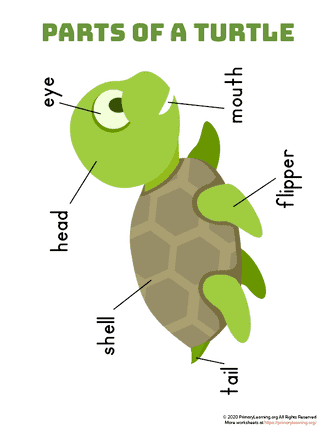
This worksheet allows students to learn the parts of a turtle. Two versions included: the picture of a turtle with labels and fill the labels with no word bank.
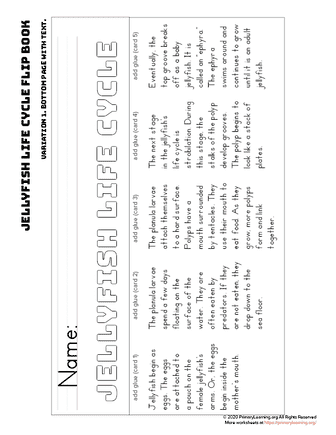
Students will love to make this turtle life cycle flipbook! Each part of the turtle life cycle is explained and illustrated.
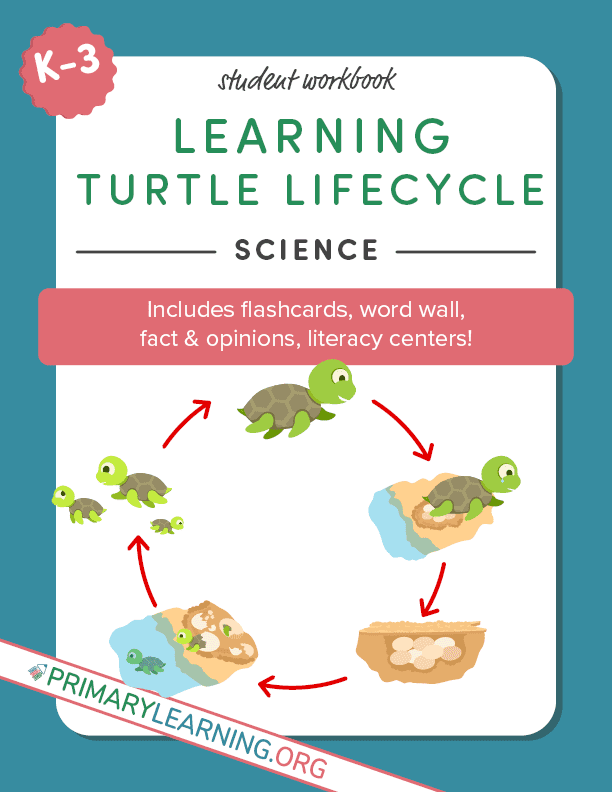
With this workbook, students explore the turtle life cycle. The main goal is to learn the transformation of the turtle from the egg to the adult in a fun and meaningful way.
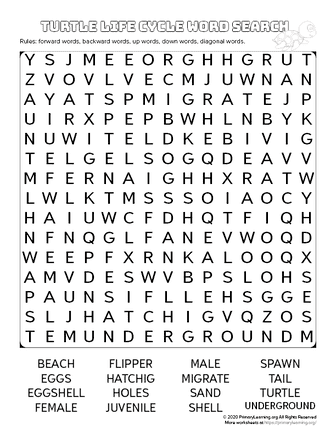
This word search helps students practice vocabulary and build their understanding of the turtle life cycle.
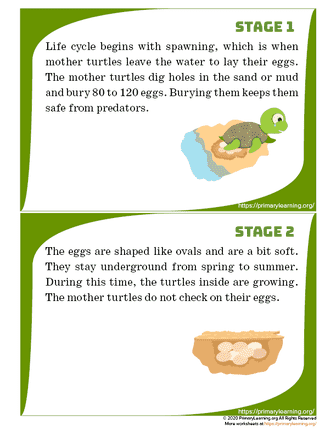
Children are natural scientists and love learning about animals. Use this turtle life cycle cards for reading about the metamorphosis.
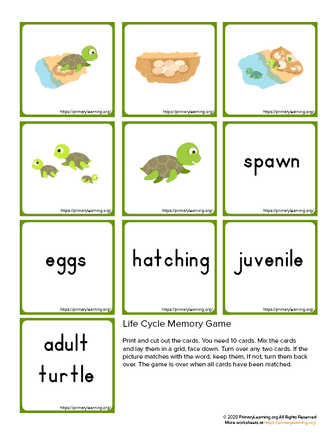
Playing turtle life cycle memory game is not only good for concentrating skills, but also reinforce the life cycle vocabulary.
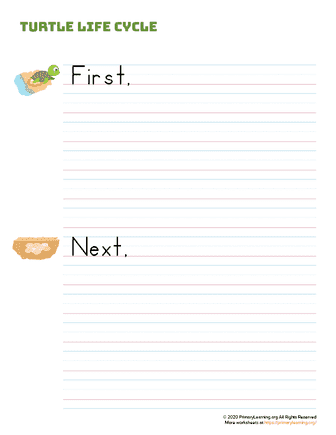
For this sequencing writing prompt activity, students use the pictures to tell about the transformation of a turtle.
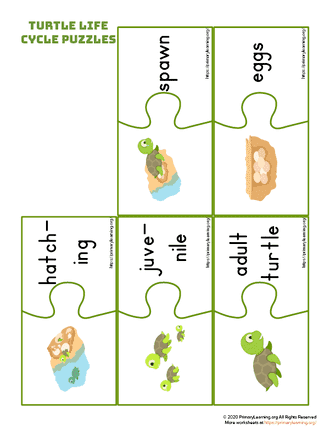
Students will love learning about different stages of the turtle life cycle with these hands-on puzzles.
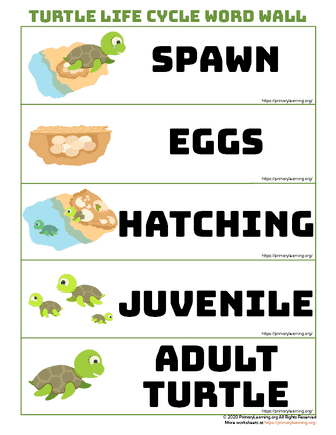
Use the turtle life cycle word wall to build vocabulary and writing skills, as well explore stages of the turtle life cycle.
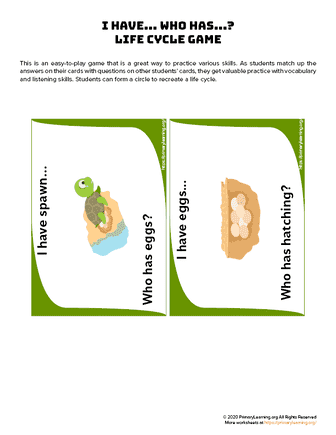
The easy-to-play turtle life cycle game is a great way to practice various skills. Students form a circle to recreate the turtle life cycle.
Students use turtle bubble thinking map to organize the information they have gathered. A bubble thinking map helps them visualize the information.
This activity is perfect to compare and contrast different stages of turtle life cycle.
Let your students practice the importance of science skills by collecting data (through observation or other resources) and drawing conclusions.
